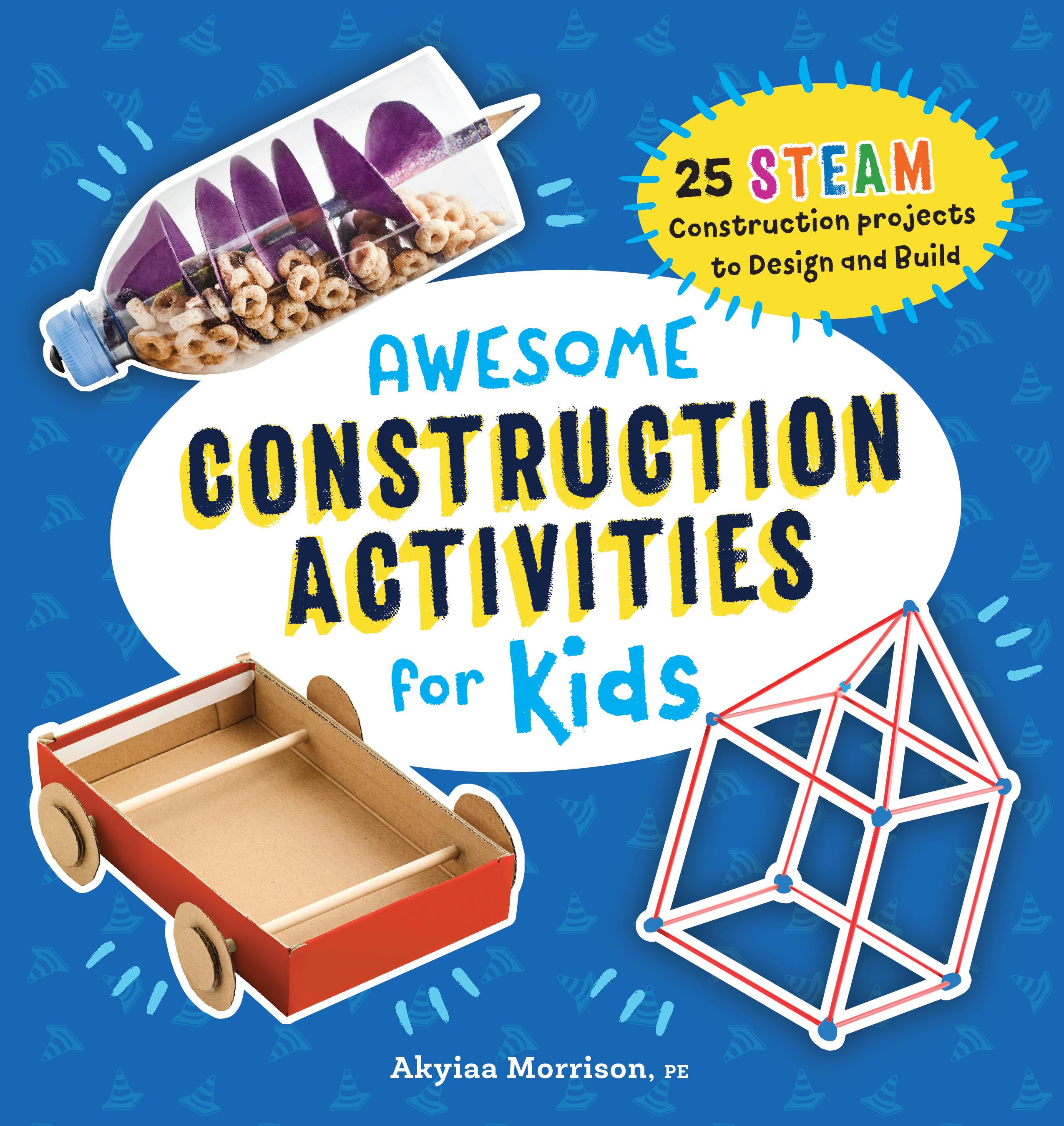
What is Awesome Construction Activities for Kids about?
Awesome Construction Activities for Kids is a hands-on STEAM activity book about how construction and civil engineering work. It includes 25 projects that help kids design and build models related to roads, bridges, railroads, water systems, towers, and construction tools.
Who wrote Awesome Construction Activities for Kids?
The book was written by Akyiaa Morrison, PE. She is a professional engineer with experience in civil engineering, road and railroad construction, and capital planning.
What do kids learn from this construction activity book?
Kids learn how construction connects to science, technology, engineering, art, and math. The book also explains real-world topics like soil, water pressure, wastewater treatment, earthquakes, roads, railroads, and structural strength.
Does this book teach real engineering concepts or just simple crafts?
It teaches real engineering concepts through simple projects. Each activity includes step-by-step instructions plus a "Hows & Whys" section and a STEAM connection that explain how the project relates to real construction and engineering.
What kinds of projects are in Awesome Construction Activities for Kids?
The projects include building a soil tester, paper cup tower, earthquake shake table, water filter, road, pulley, railroad, train car, levee, wheelbarrow, underdrain system, silt fence, earthquake-proof tower, cloverleaf interchange, reinforced concrete slab, self-supporting bridge, auger, and floating structure. The book also includes design-based activities like planning a subdivision.
Are the projects step by step and easy to follow?
Yes, the projects are presented with step-by-step instructions and pictures that match the steps. The book also suggests reading the project introduction first so kids understand what they are building and why it matters.
Are there different difficulty levels in this book?
Yes, the projects are labeled easy, medium, or challenging. That makes it easier to start with simpler builds and work up to more advanced construction activities.
How long do the activities take?
The project times vary. Some activities take about 15 to 30 minutes, while others take around 45 minutes to an hour, and a few include extra drying or wait time.
What supplies do you need for these construction projects?
Most projects use common household or easy-to-find materials. The book lists recurring supplies such as cardboard, cardboard tubes, cardstock, craft sticks, modeling clay, sand, gravel, shoeboxes, tape, scissors, white glue, and a low-temperature glue gun.
Do kids need adult help to use this book?
Yes, some projects need adult help. The book specifically says that projects with caution notes should be done with a grown-up, especially when using sharp tools, glue guns, concrete, bleach, flocculant, or other materials that need supervision.
Can kids do the activities on their own?
Some activities can be done more independently, but not all of them. The book includes safety cautions and notes that a grown-up should help with certain tools, chemicals, and messier or more complex builds.
Is this book messy or does it need outdoor space?
Yes, some projects can get messy and a few are meant to be done outside. The introduction and usage section both note that construction activities may involve dirt, water, and outdoor work.
Does the book explain how the projects connect to real life?
Yes, every activity is tied to real construction work. The book explains how each project relates to real-life engineering jobs and infrastructure like dams, levees, roads, wastewater treatment facilities, and earthquake-safe buildings.
Is Awesome Construction Activities for Kids good for kids who love trucks, building, and construction sites?
Yes, it is made for kids who are excited by construction and building. The introduction says it was created especially for kids who love construction sites and want to explore how things are designed and built.
Will this book help kids understand what engineers do?
Yes, it introduces both civil engineers and construction engineers and explains how they solve problems. It also teaches the engineering design process: ask, imagine, plan, create, and improve.
Does the book cover more than one kind of engineering?
Yes, it covers several types of civil engineering. The projects connect to structural, geotechnical, transportation, environmental, hydraulic, and construction engineering.
Is there room for kids to experiment and improve their designs?
Yes, the book encourages kids to test, adjust, and improve what they build. It also includes space for notes and reminds readers that improving a design is part of real engineering.